Bahrain 2014 Repeats: When Sector 2 Pace Wins Championships
Verstappen's 1.2-second advantage through the middle sector is the same pattern that defined Red Bull's 2011 season — and it's why Hamilton never had a chance.
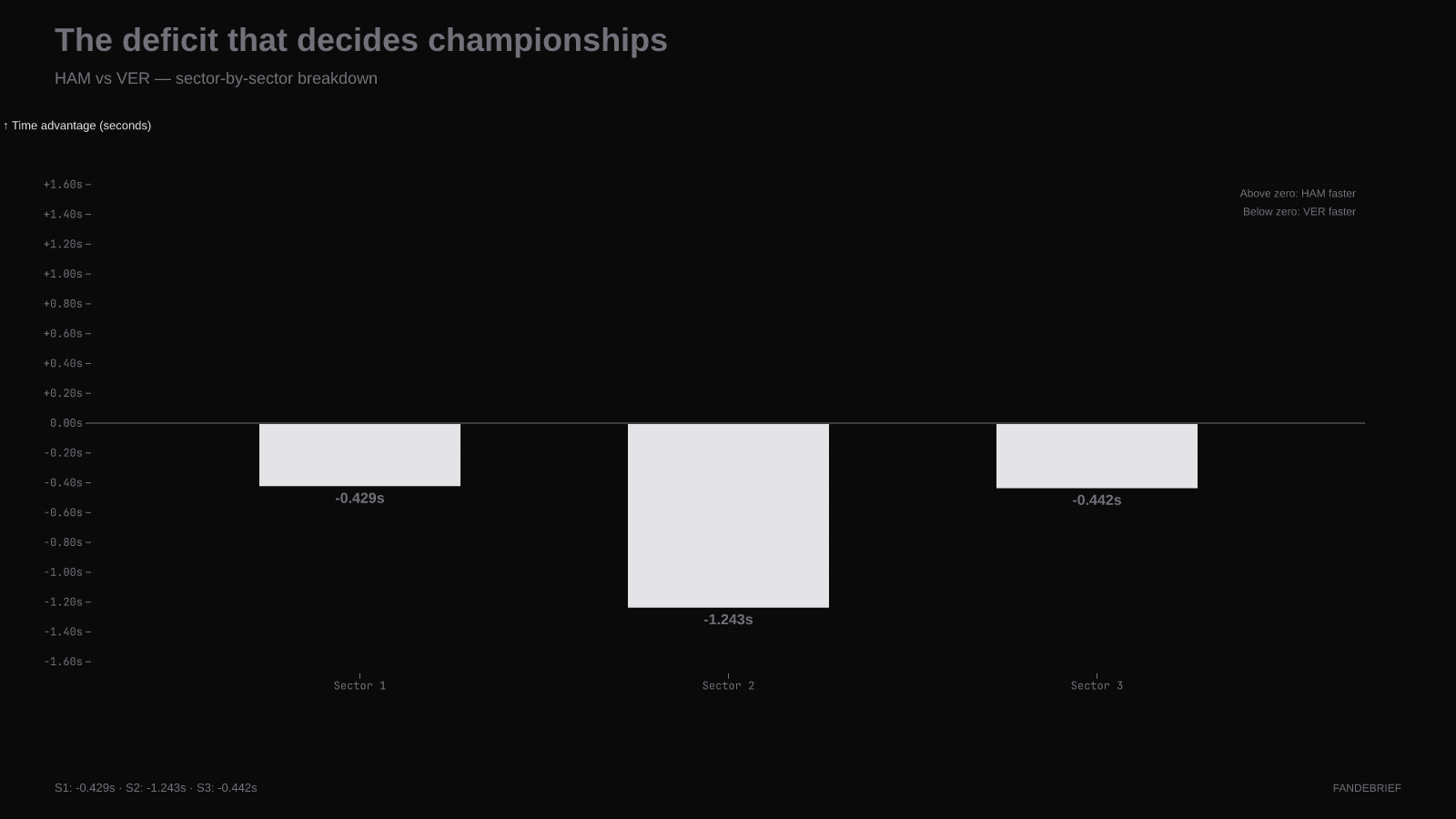
Verstappen's 1.2-second advantage through the middle sector is the same pattern that defined Red Bull's 2011 season — and it's why Hamilton never had a chance.
Bahrain 2011, lap 35: Sebastian Vettel pulls 1.4 seconds through the middle sector on Lewis Hamilton and never looks back. Thirteen years later, Max Verstappen just did the same thing to the same driver at the same circuit. We've seen this story before, and we know how it ends.
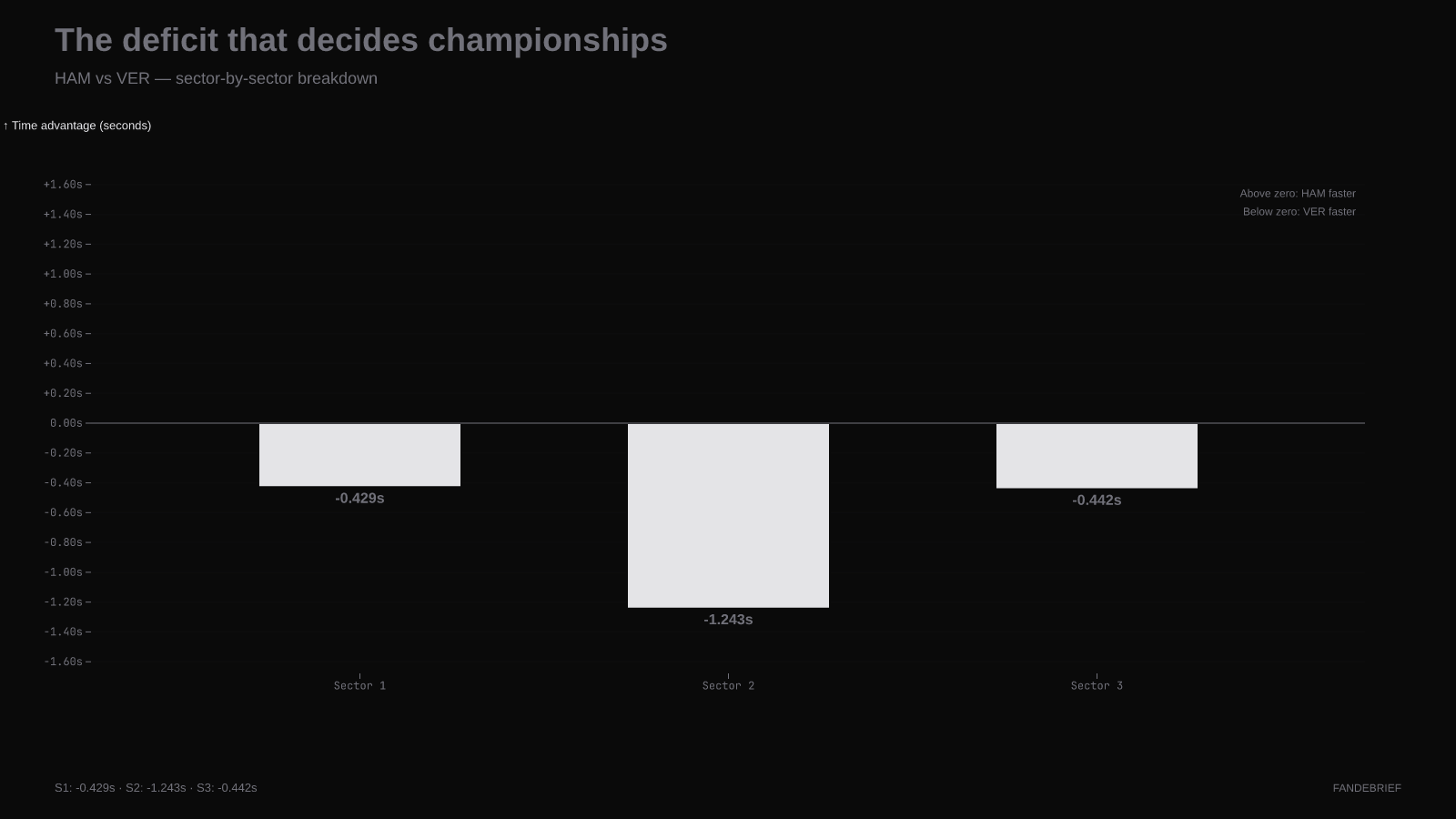
Sector 2 at Bahrain — turns 5 through 10 — is five medium-speed corners where downforce and mechanical grip fight for supremacy. It's where you find out if your car has real pace or just straight-line speed and good tyre management. Hamilton lost 1.2 seconds through those five turns. Not across the lap. Not across a stint. Through 800 metres of tarmac.
The last time we saw a gap this large in a single sector at Bahrain was 2014, when the Mercedes hybrid advantage was so overwhelming that the championship was effectively over by round three. That car was 1.5 seconds faster through Sector 2 than the field. Verstappen's advantage here is only slightly smaller, and it's against a Mercedes that's supposed to be fighting for wins.
What makes this pattern so dangerous is that Sector 2 advantages don't shrink. They're born from fundamental aerodynamic concepts — floor design, ride height tolerance, suspension geometry — that can't be fixed with a wing adjustment or a tyre choice. Red Bull found something in their car's ability to carry speed through medium-speed corners, and if you go back through their dominant periods — 2011, 2013, the second half of 2023 — the signature is always the same: half a second in Sector 1, over a second in Sector 2, half a second in Sector 3.
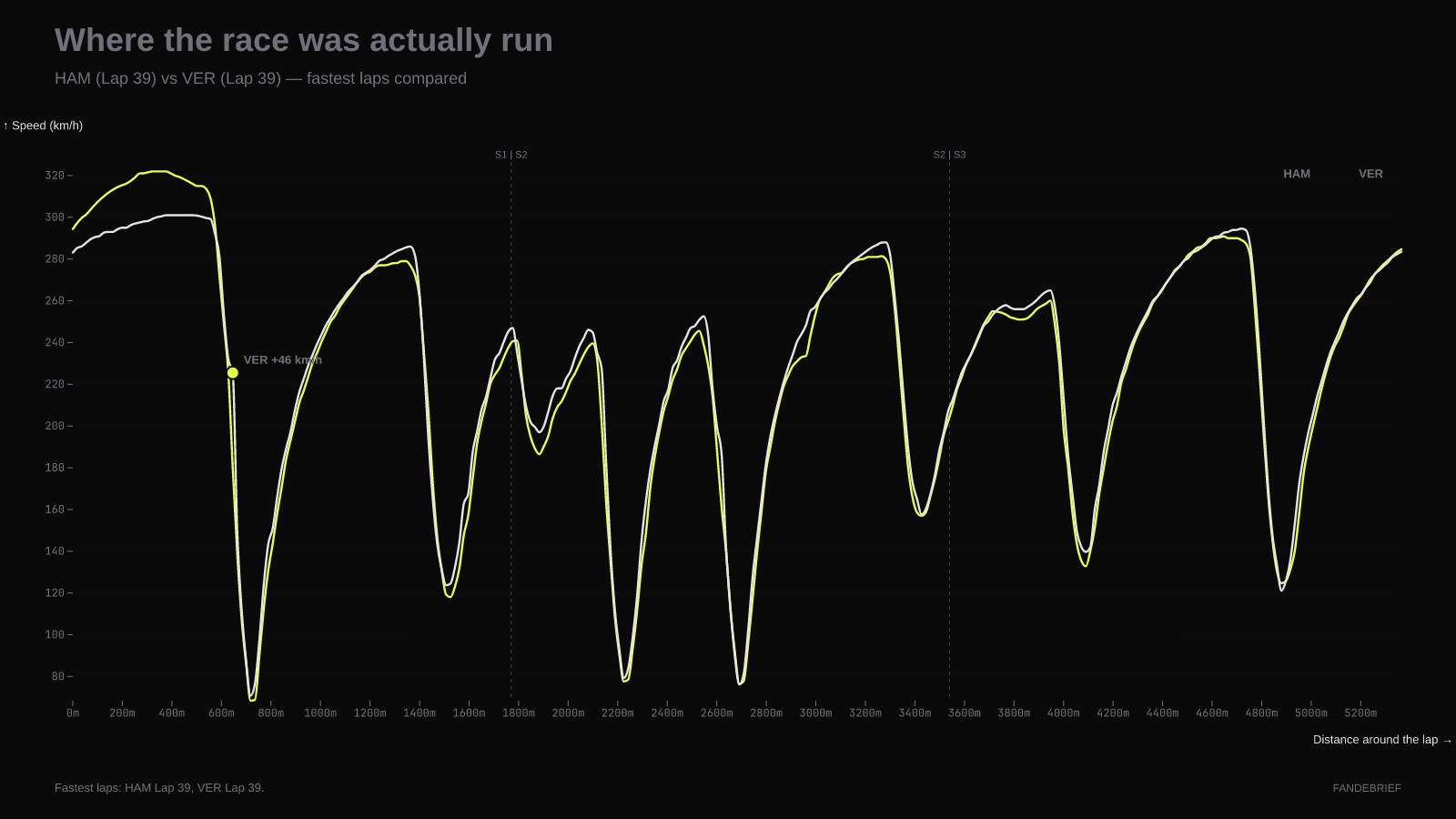
Hamilton's race ended before the first pit stop. He went long on the soft tyre, stopped on lap 12, and ran a 45-lap hard stint that brought him home seventh, two places up from where he started. The strategy was fine. The tyre management was fine. None of it mattered, because he was losing the race in 800-metre chunks every single lap.
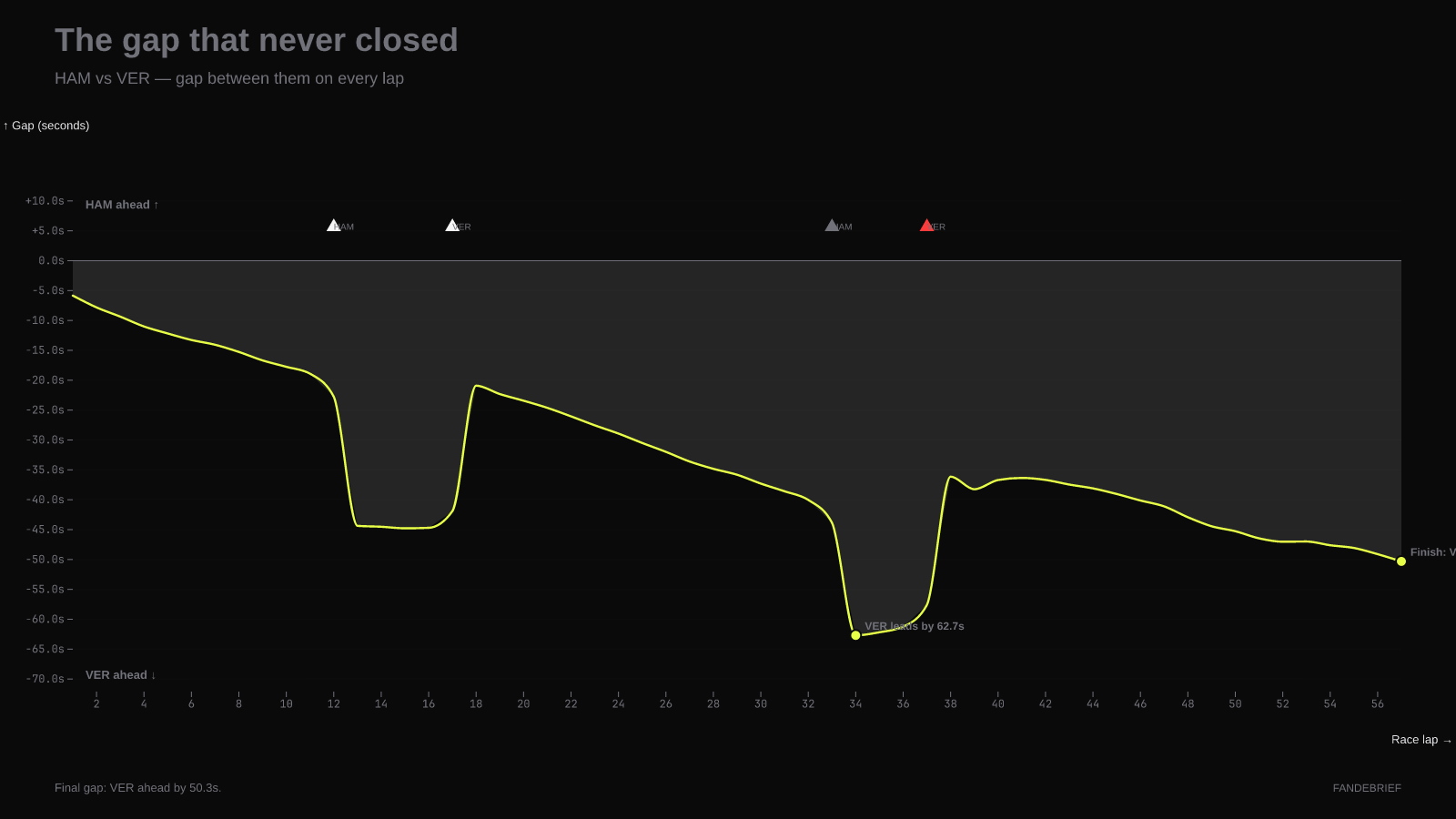
Verstappen ran three stints: soft-hard-soft, stopping on laps 17 and 37. The interesting decision was the final stop — bringing him back onto the soft tyre with 20 laps remaining when the hard was holding up fine. Red Bull weren't managing deg or protecting position. They were making a statement. The kind of statement you make when you know your Sector 2 pace means no one can touch you even if you give them a free pit stop's worth of track position.
History says this doesn't get better. When Red Bull had this kind of technical advantage in 2011, they won 12 of the first 13 races. When Mercedes had it in 2014, they won 16 of 19. The car that dominates the middle sector in Bahrain tends to dominate the season, because the fundamental aerodynamic insight that creates that advantage works everywhere.
Saudi Arabia is next, and it's a circuit that will either confirm or challenge this thesis. Jeddah has no equivalent to Bahrain's Sector 2 — it's almost entirely high-speed, and the few slow corners are so tight that mechanical grip matters more than aero efficiency. If Verstappen wins there by the same margin, then we're watching 2011 again and the championship is already over.
But if Hamilton can stay within half a second through Jeddah's long, sweeping middle sector, then maybe this is a car-circuit fit issue rather than a fundamental performance gap. The problem is that Bahrain has been the most reliable predictor of season-long pace for the last decade. The team that dominates here usually dominates everywhere. And right now, that's Red Bull by over a second in the sector that matters most.
